Tech Amsterdam Schools Collective
Amsterdam, NL
Project: Amsterdam International Community School / TASC
Location: Amsterdam, NL
Year: 2018-2019 & 2022-2023
Program: Public, Educational
User: Esprit Scholen
Total students: 600
Gross Floor Area: 5.500 m2 plus 650 m2 bvo expansion
total 6.150 m2 bvo
Client: Municipality of Amsterdam,
Esprit Scholen, De Meeuw
Interior Design main building: Studio MAF
Builder: De Meeuw & Norel Hallenbouw
Installations: Mersoch
Photography: Elisabeth van den Arend Schmidt & Thijs Wolzac
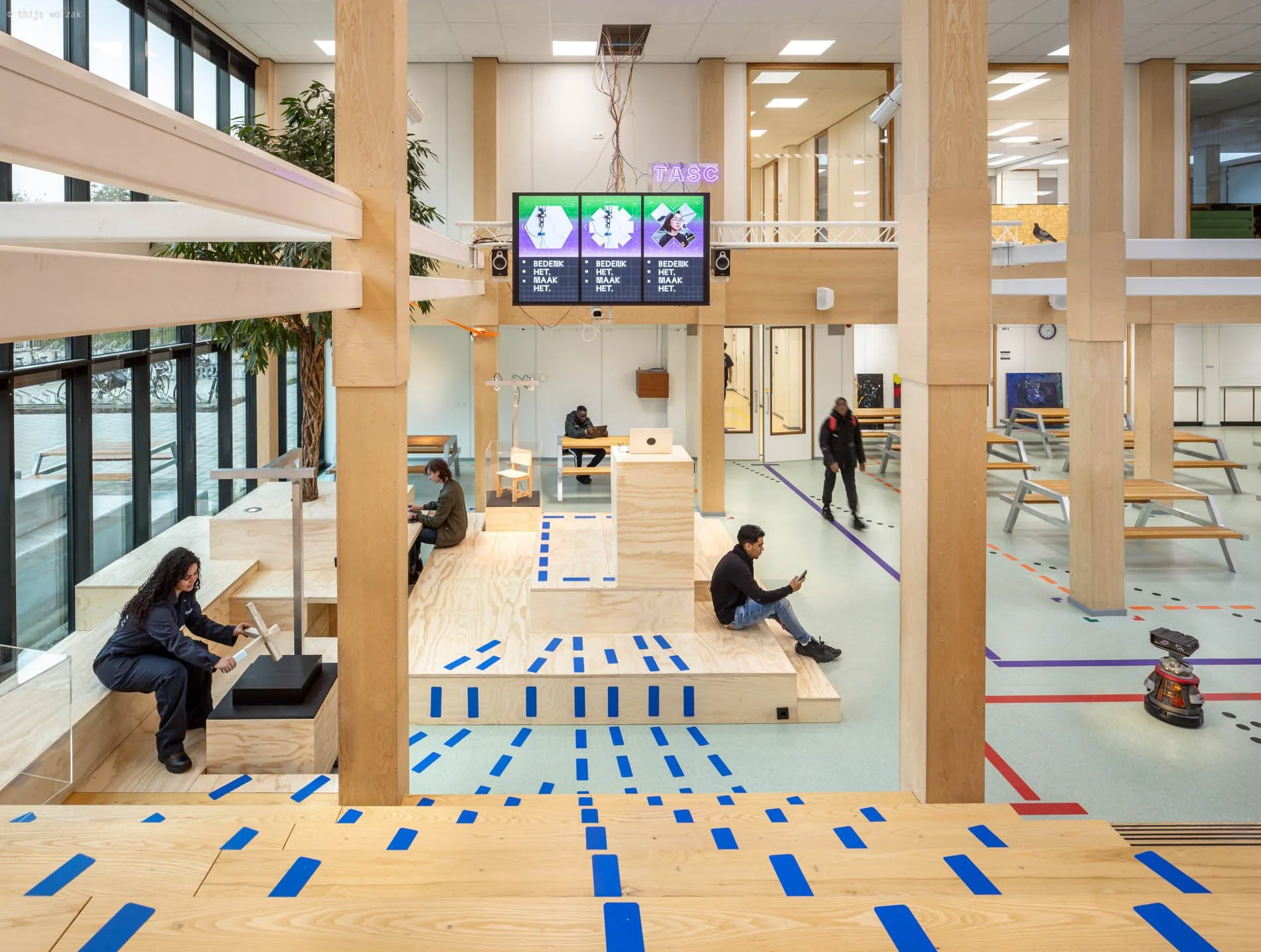
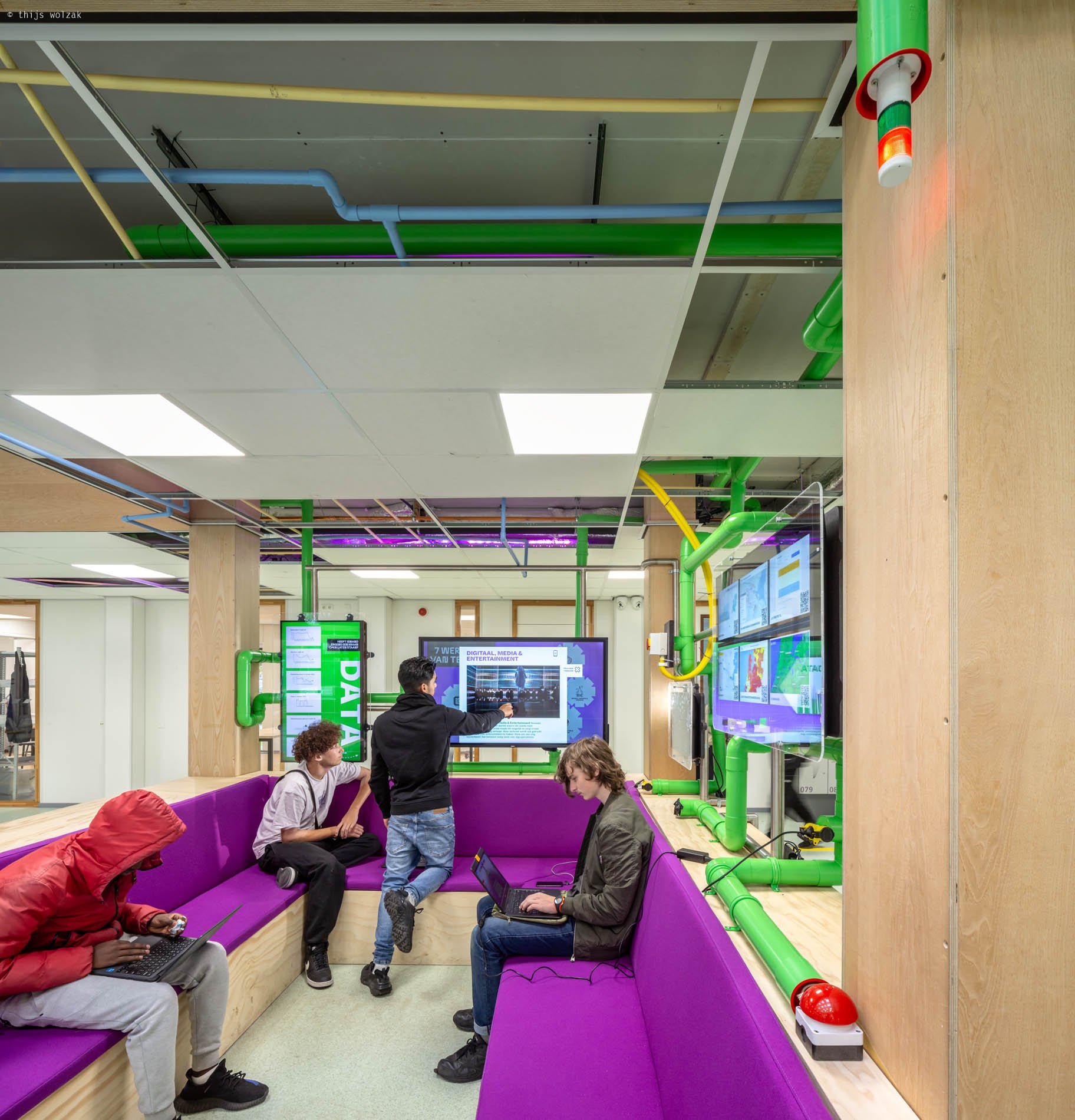
Schools are among the most dynamic building types in architecture. Shifting curricula, uncertain enrolment, and rising demands for environmental quality require learning environments that can adapt quickly expanding, contracting, transforming, adding functions, or even being disassembled and relocated. As a practice with deep expertise in modular building in urban contexts, BurtonHamfelt was commissioned by the Municipality of Amsterdam (G&O), De Meeuw and Esprit Schools to renovate the main building and design an extension for the new user TASC. An accelerated design-and-build approach enabled the project to be conceived, delivered and occupied in less than a year, while safeguarding spatial clarity and long-term flexibility. The arrival of a new user and the open-building logic prompted a new interior layer inspired by future technical skills (Studio MAF), alongside targeted upgrades to classrooms and shared spaces.
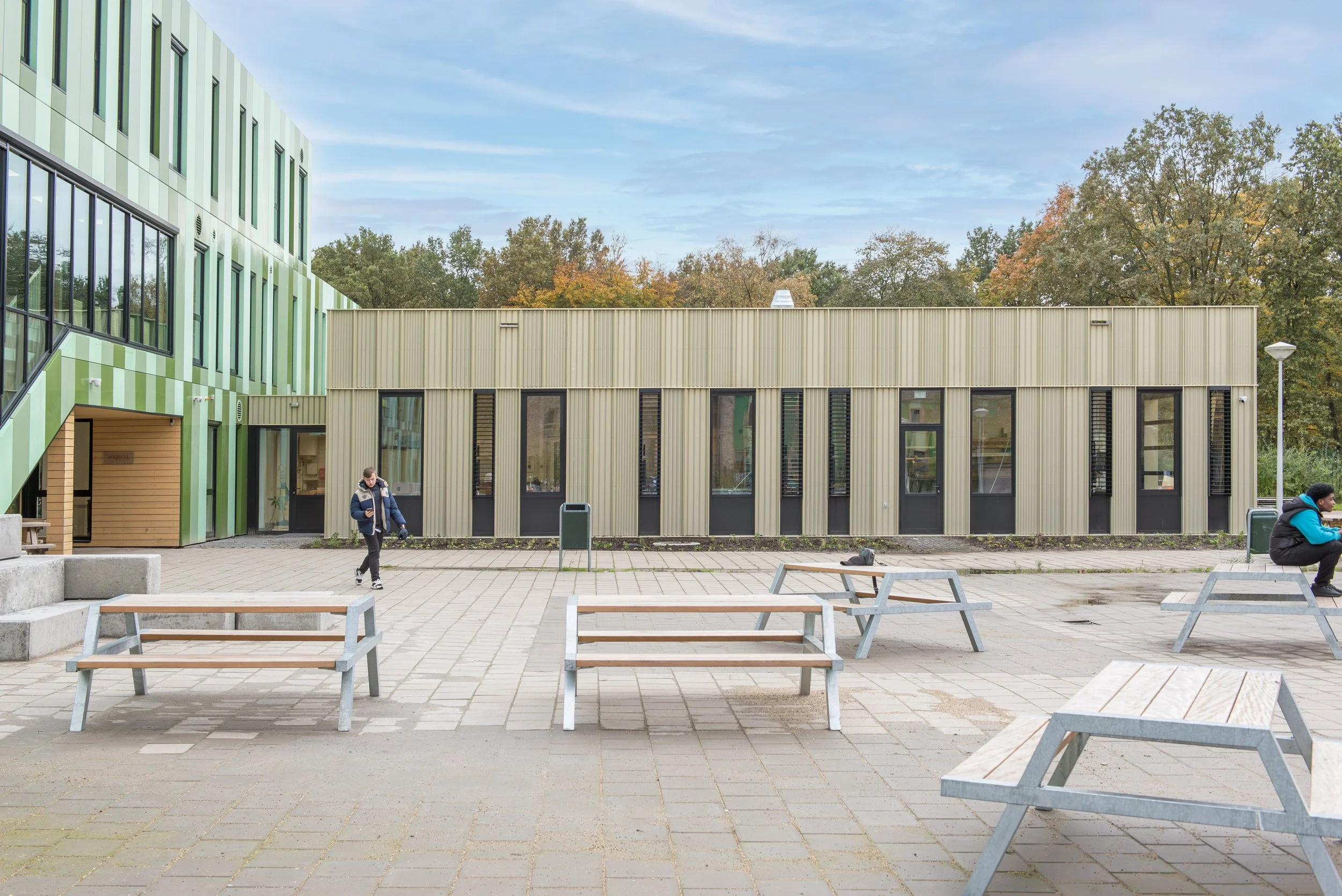
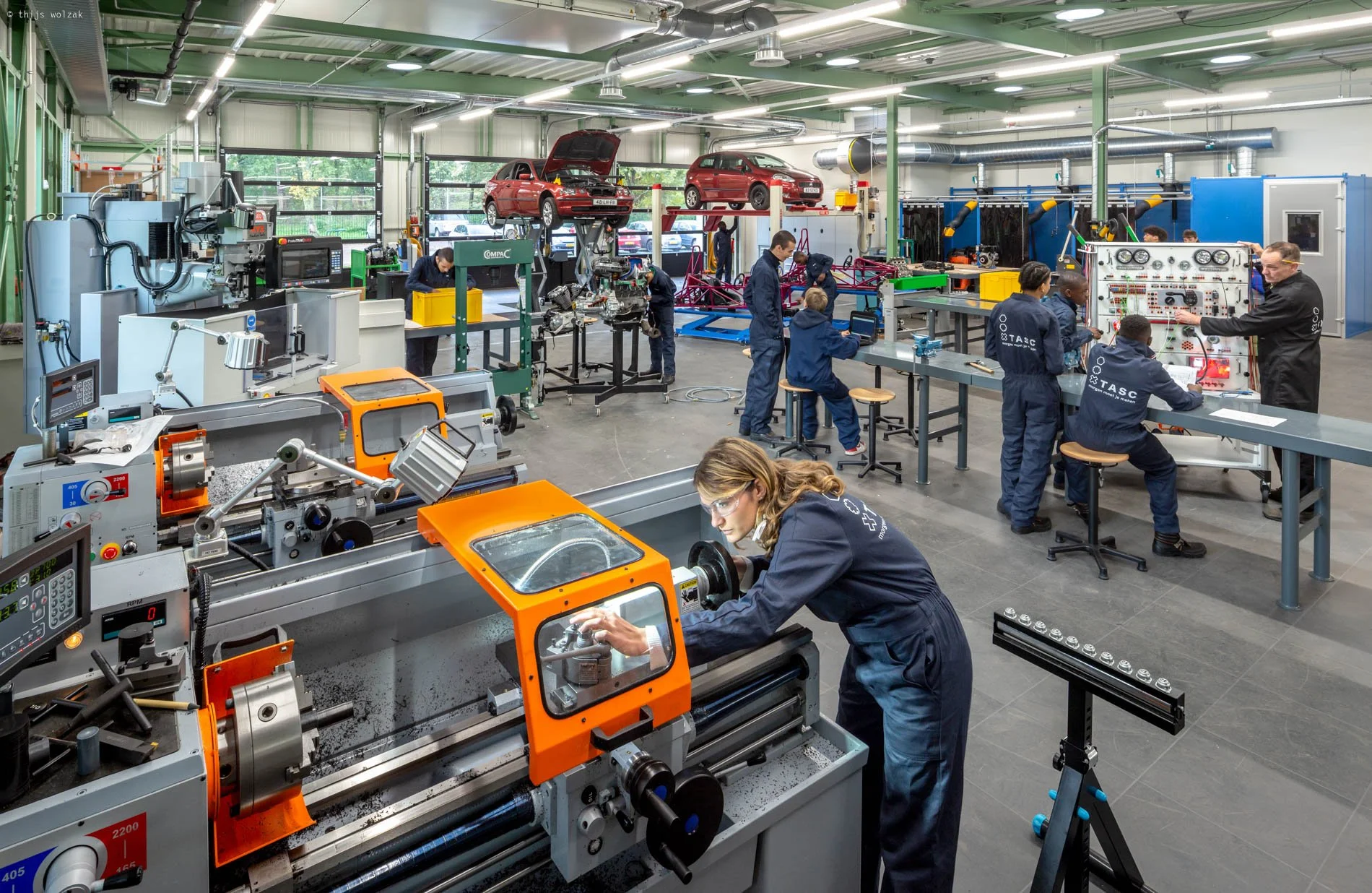
By strengthening connections between learning environments, outdoor spaces and the entrance, the design supports healthy, movement-rich and discovery-based education. Informal meeting places distributed throughout the building encourage interaction between students and teachers, while new façade openings bring daylight deep inside and connect interior and landscape. To meet new requirements, a 650 m² high garage addition was developed using the same circular and modular principles. A demountable steel structure with sandwich panels is wrapped in light-gold profiled fins, aligned with the rhythm of the original façade. Three textures create depth and a shifting glow with changing sunlight, while generous openings reveal an exposed green structure expressing the technical character of the space and visually linking the extension to the wooded campus setting.