Industrial Nature The Anthony
The Hague, NL
Location: Binckhorst, The Hague, NL
Year: 2018
Site Footprint: 793 m2
FSI Netto: 13.2
Gross Floor Area: 10.500 m2
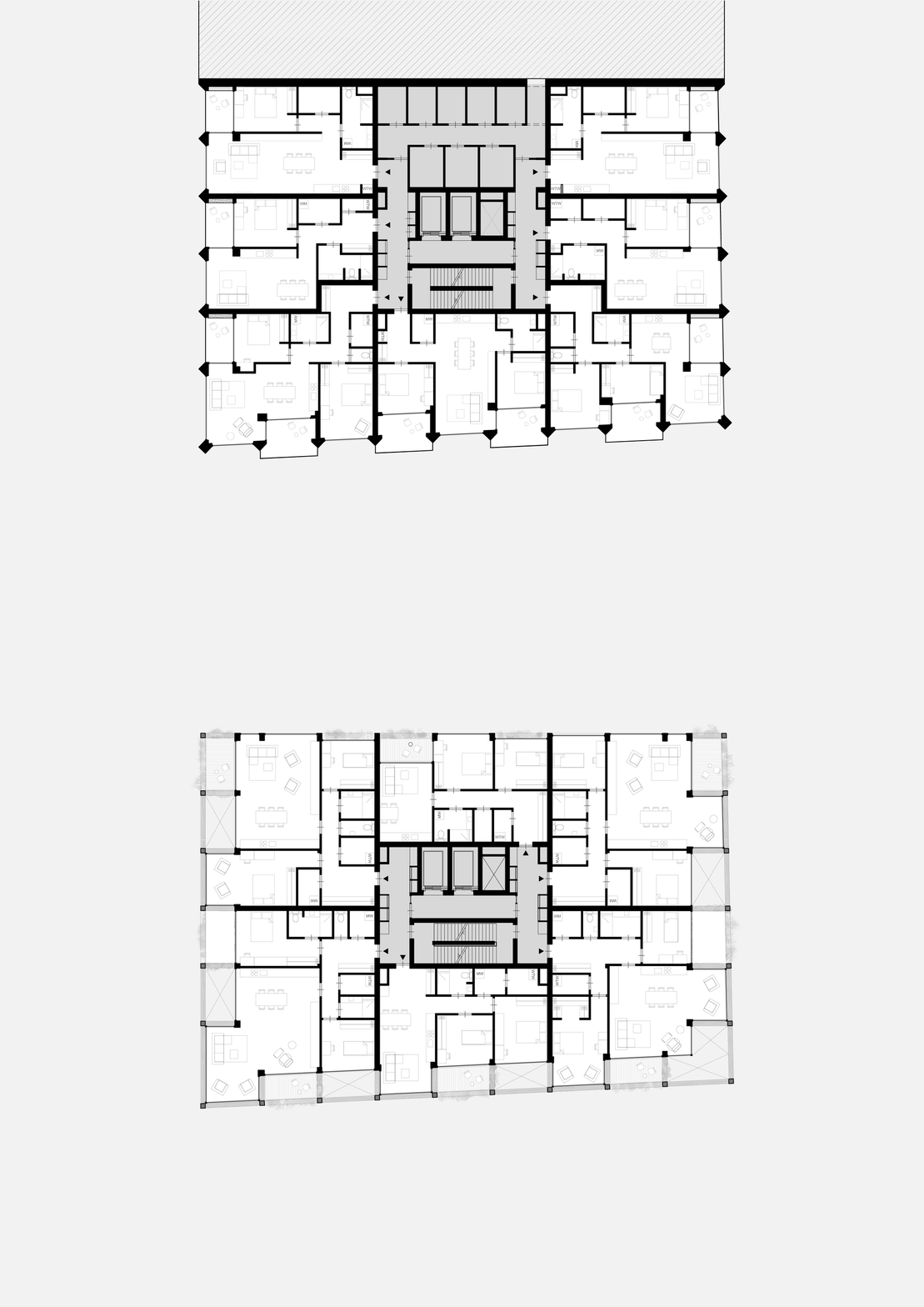
Total Number of Apartments: 77
ranging in sizes from 65m2, 100m2 and 140m2
Program: Residential, Offices, Commercial
Client: Bemog projectontwikkeling
Associates: Olaf Gipser Architects
Sustainability & Installations:
Adviesbureau DWA
Construction: Pieters Bouwtechniek
Landscape & Ecology:
Smartland Landscape Architecture
Urbanism: Starling Structures
Mobility: Advier
Renderings: Plomp
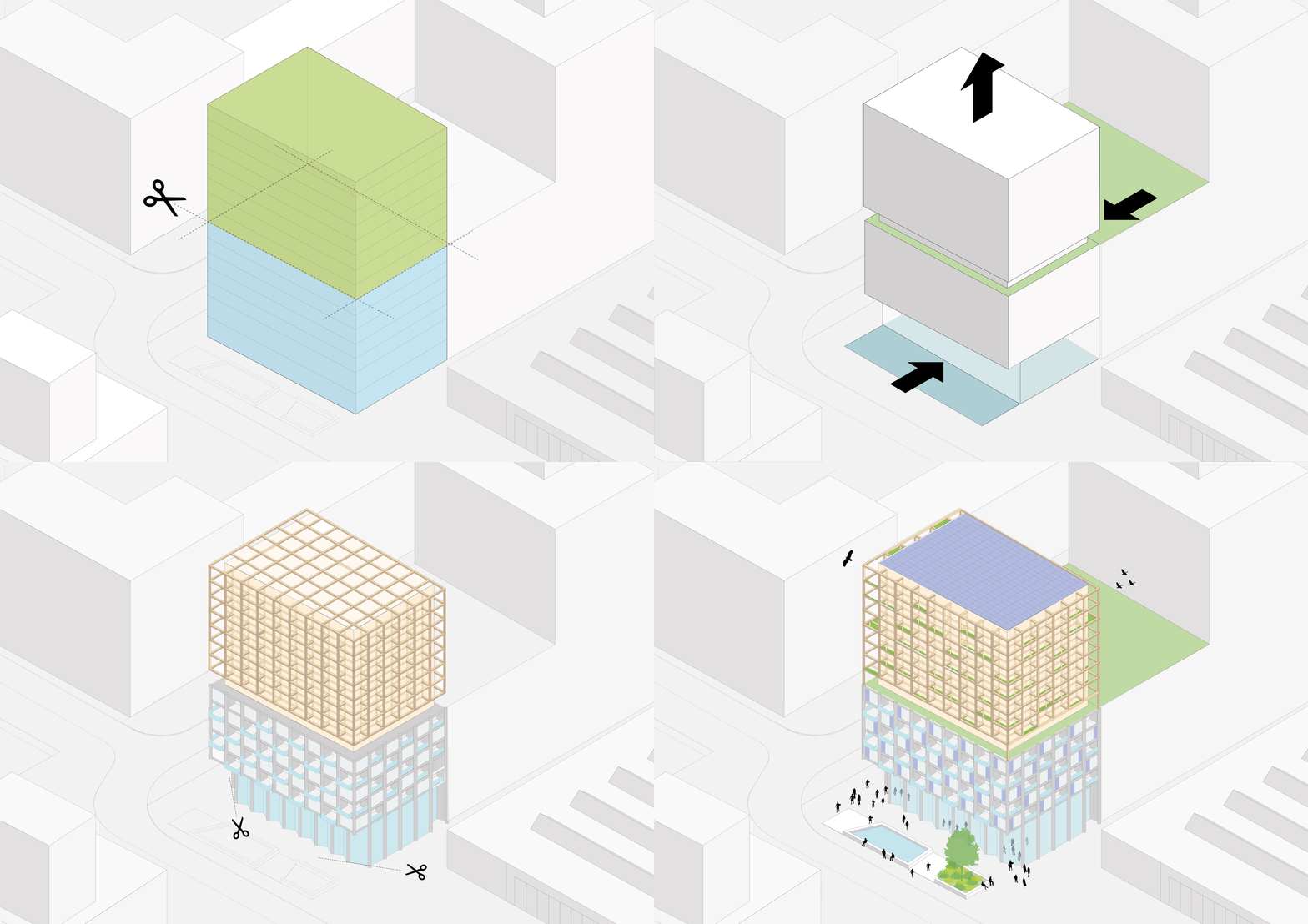
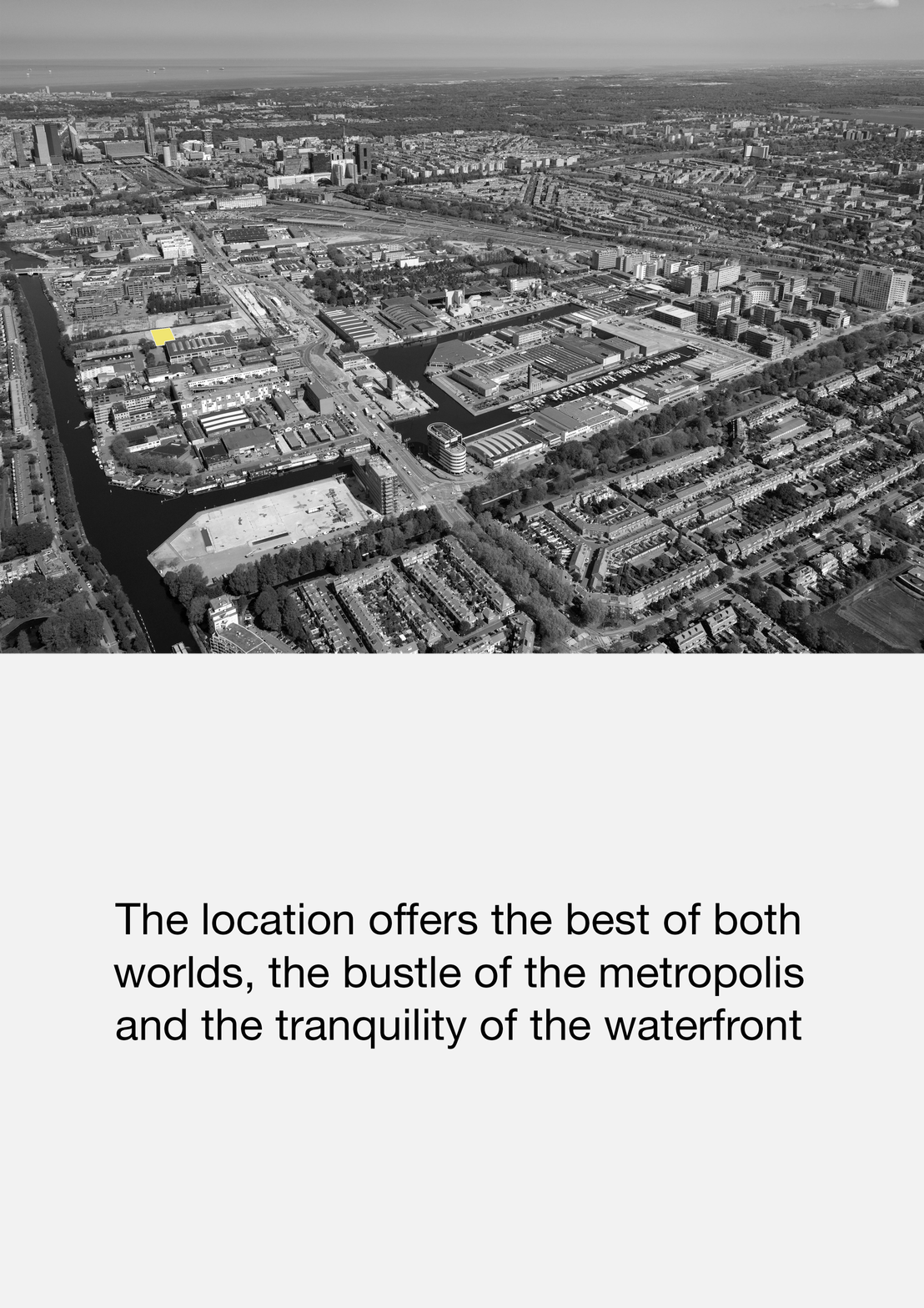
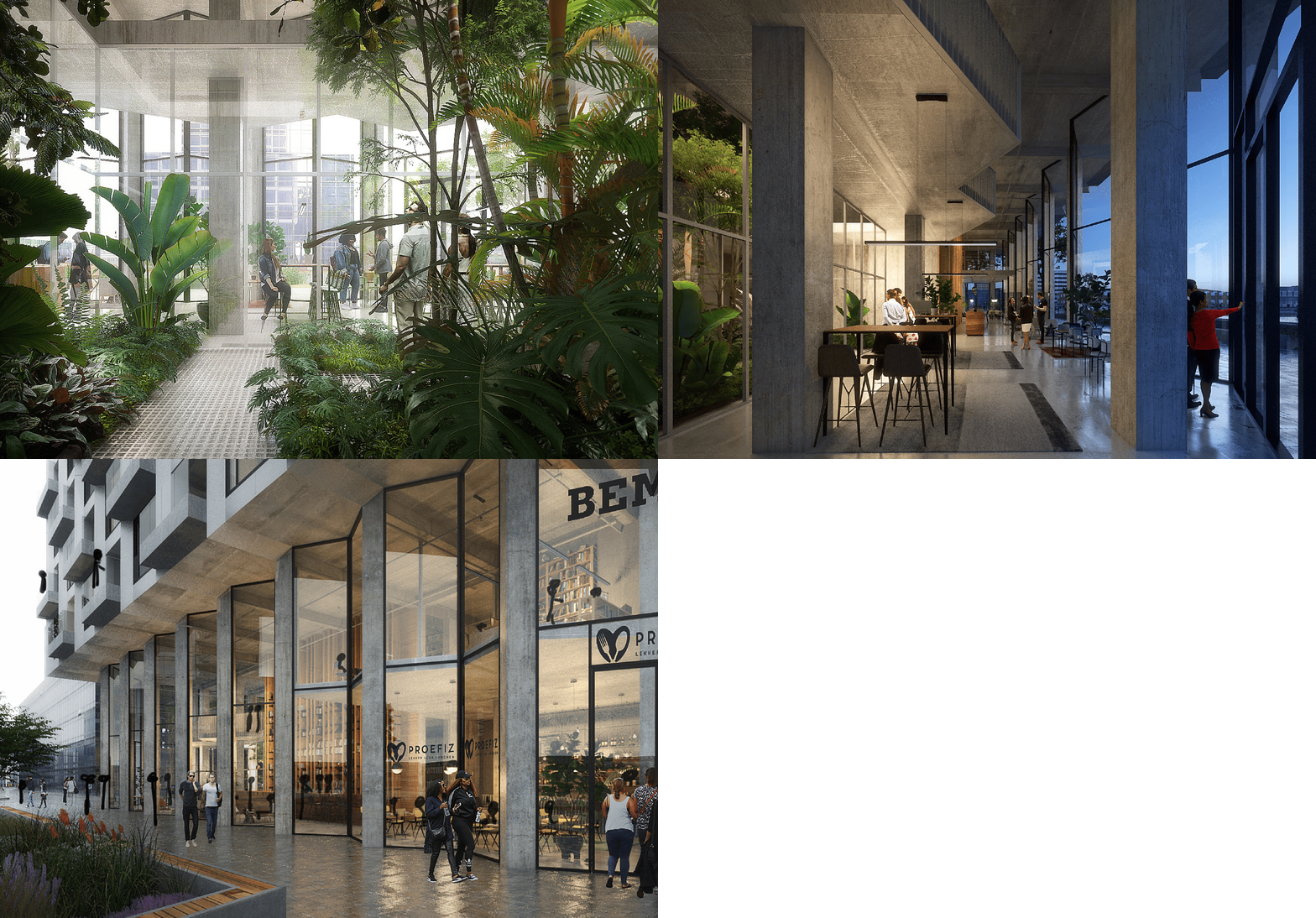
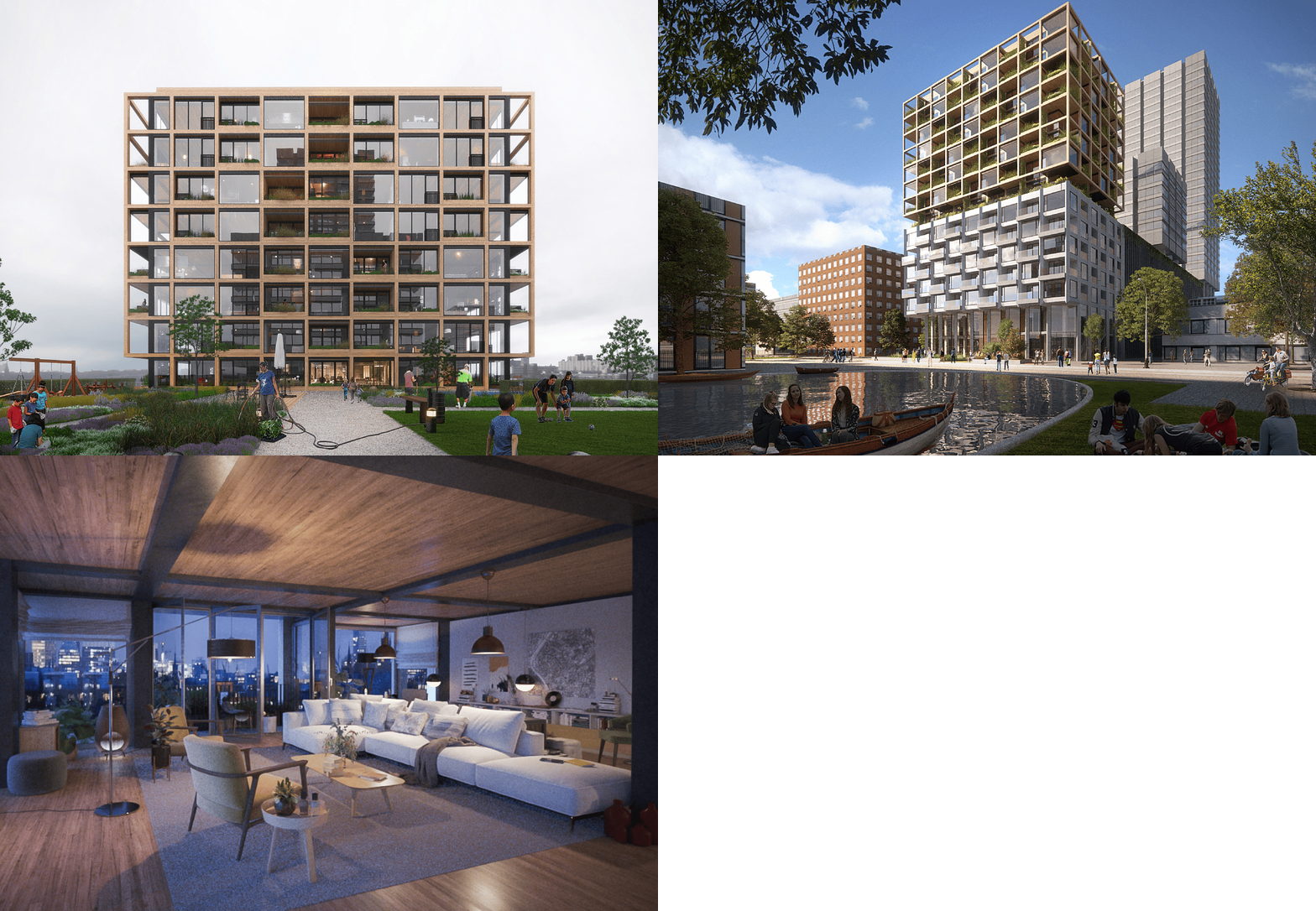
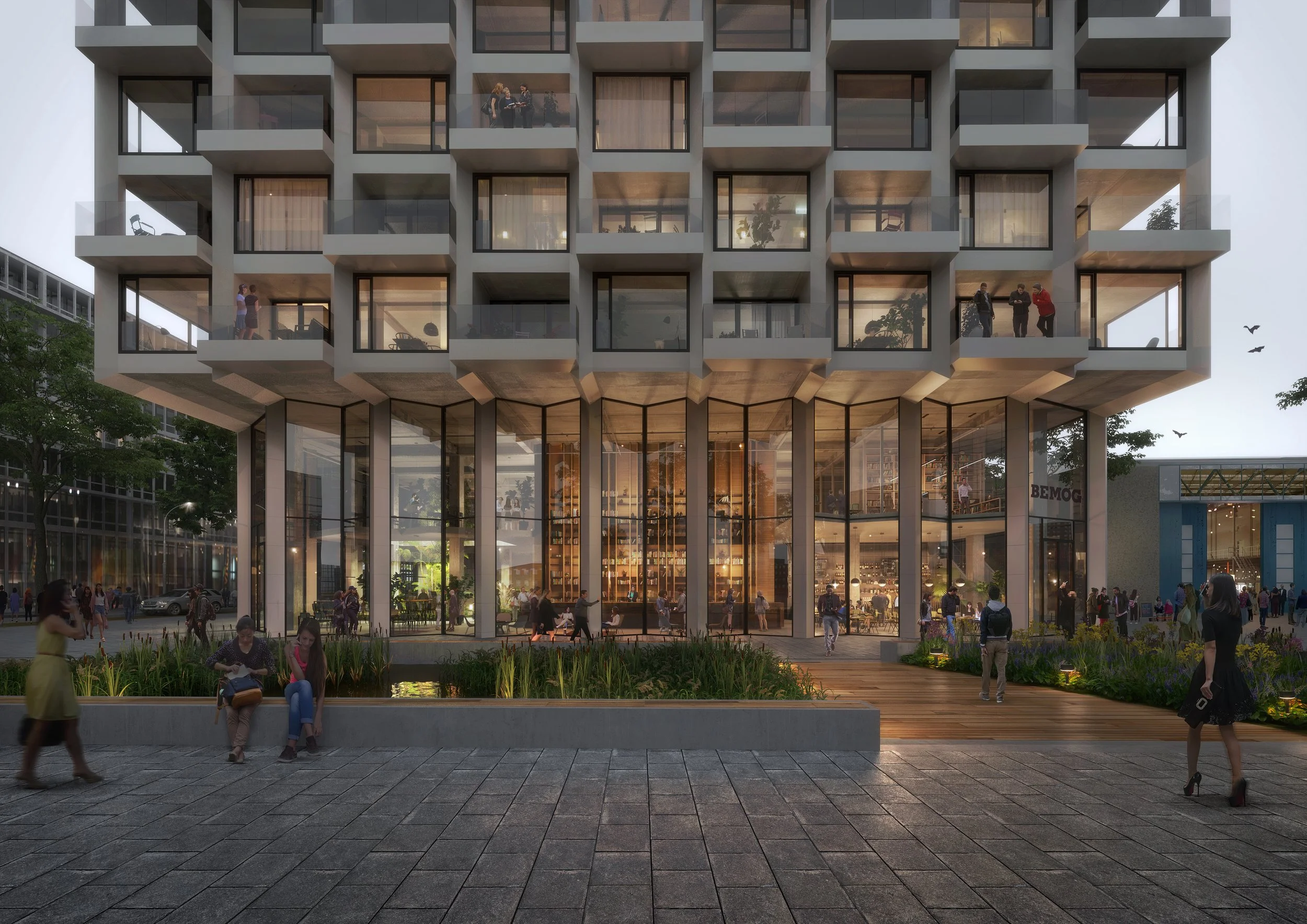
THE ANTHONY, our proposal for Kavel 1C, is a carefully elaborated response to The Hague’s ambitions for densification, sustainability and greening. Located in the robust, mixed residential and working environment of the Binckhorst, the project introduces an architecturally strong and recognisable building that reinforces urban identity while addressing contemporary challenges such as energy, water, ecology, climate adaptation and mobility. The design brings together proven and innovative solutions and makes them visible as part of the architectural expression. Two complementary living environments are added to the Trekvlietzone: a compact, highly urban block at the base and a more open, nature-inclusive tower above, each with its own subtle industrial character rooted in the area’s history setting a benchmark for future resilient urban development.
The design vision is structured around five core themes. First, urbanity: Plot 1C marks the transition from the dense Binckhorstlaan to the more open Trekvliet waterfront, and the building’s articulation responds to this change in scale. Second, ensemble: THE ANTHONY forms part of a trio of buildings that together create a coherent urban figure, with the southern block anchoring relationships to public space and the Fokker Terminal. Third, the building as producer: drawing on the Binckhorst’s industrial heritage, the project reinterprets production logic as a generator of healthy, sustainable living. Fourth, industrial nature: urban and ecological qualities are combined in a layered living environment. Fifth, low maintenance and demountability: the building is conceived as circular, adaptable and durable, using demountable systems and sustainable materials to ensure long-term resilience.