
Docklands Wasserstadt
Hannover, DE
Location: Hannover, DE
Year: 2022 - First prize (southern neighbourhood)
Site footprint: -
Status: Ongoing
FSI netto: -
Gross Floor Area: 160.600 m2
Green Areas: 10.500 m2
Parking: 1.467 parking places
Total: 197.600 m2
Total number of apartments: 1.720
Program: Work, Public, Housing
Client: Wasserstadt-Limmer gmbh &
co. kg & the Municipality of Hannover
Associates: UP+ Hannover
Landscape: LOLA Rotterdam
Mobility: SHP
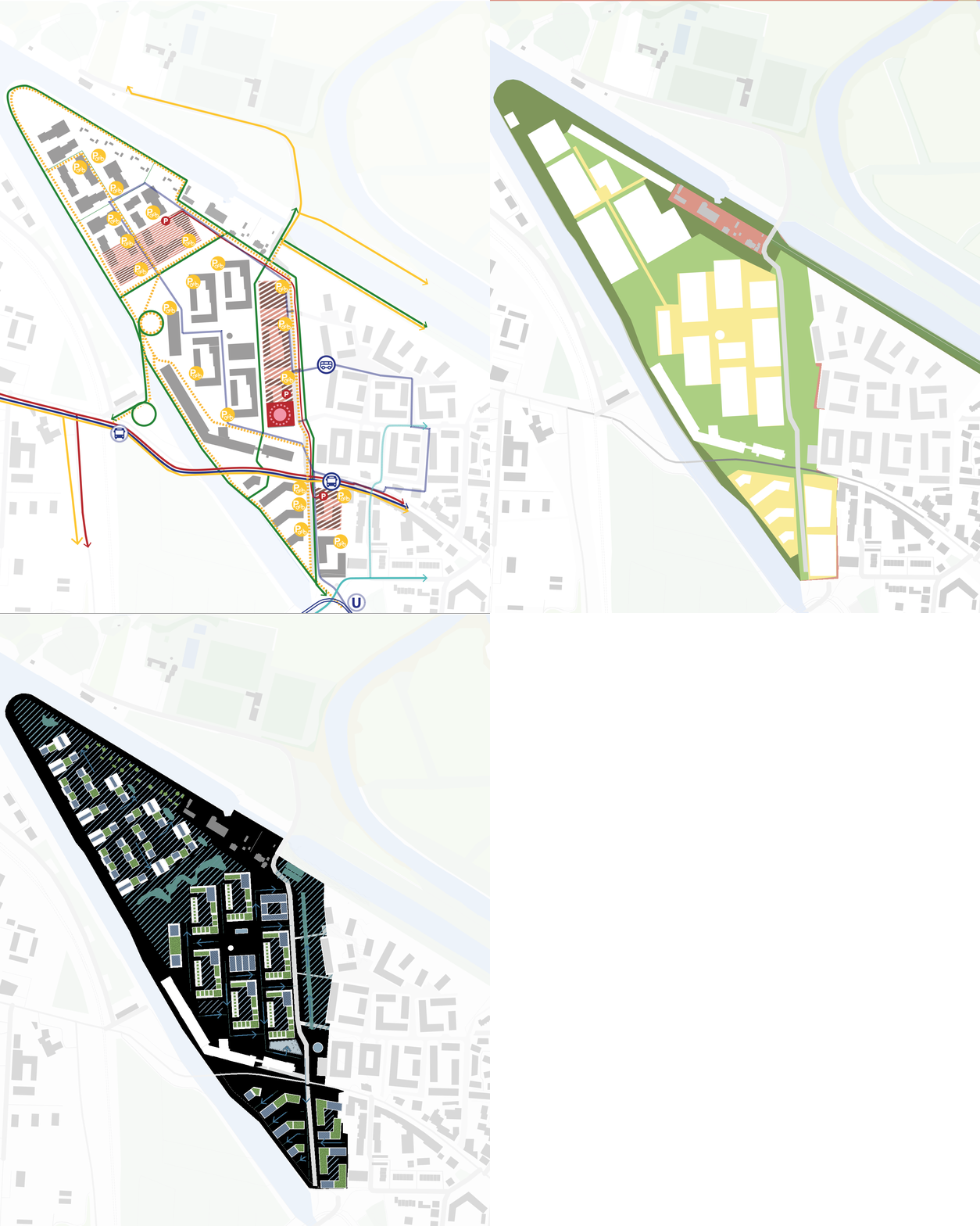
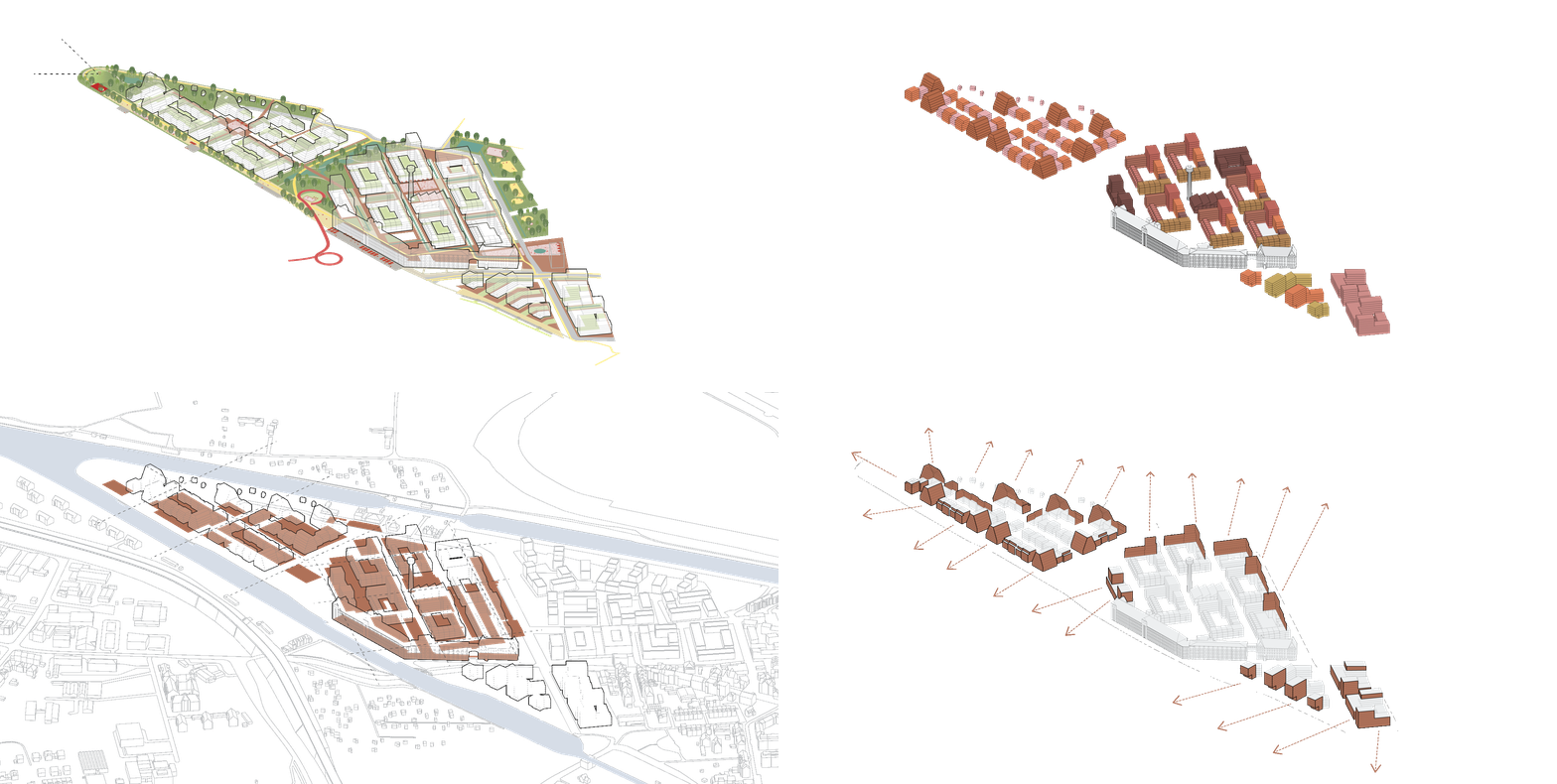
The Municipality of Hannover and WasserstadtLimmer GmbH & Co. KG initiated an international competition for one of the city’s largest and most forward-looking urban developments. The ambition was to imagine a new type of neighbourhood: car-free, healthy, sustainable and climate-adaptive, while stimulating the local economy and introducing innovative mobility concepts that connect seamlessly to surrounding districts. Our proposal is rooted in the near-natural setting of Wasserstadt Limmer, defined by two waterways, and in the site’s industrial past as the former Continental tire factory. These conditions shape both the urban design and landscape strategy, ensuring that new development grows from the site’s identity. The masterplan builds on this layered context to propose a resilient, future-oriented model for urban living. Using the historical footprint of the former factory, the plan is structured into three distinct neighbourhoods. The Urban Quarter, the Green Quarter and the Docklands
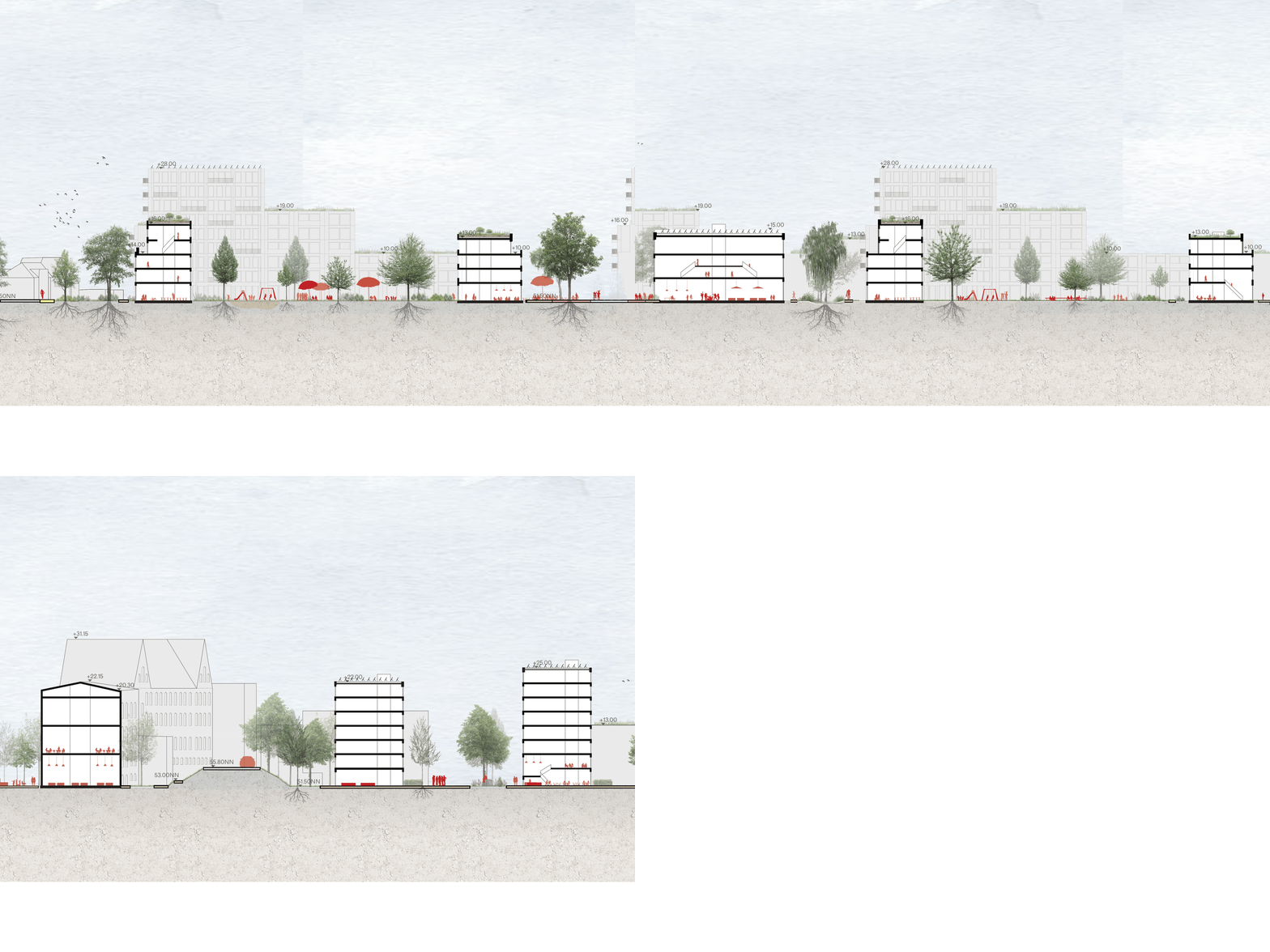
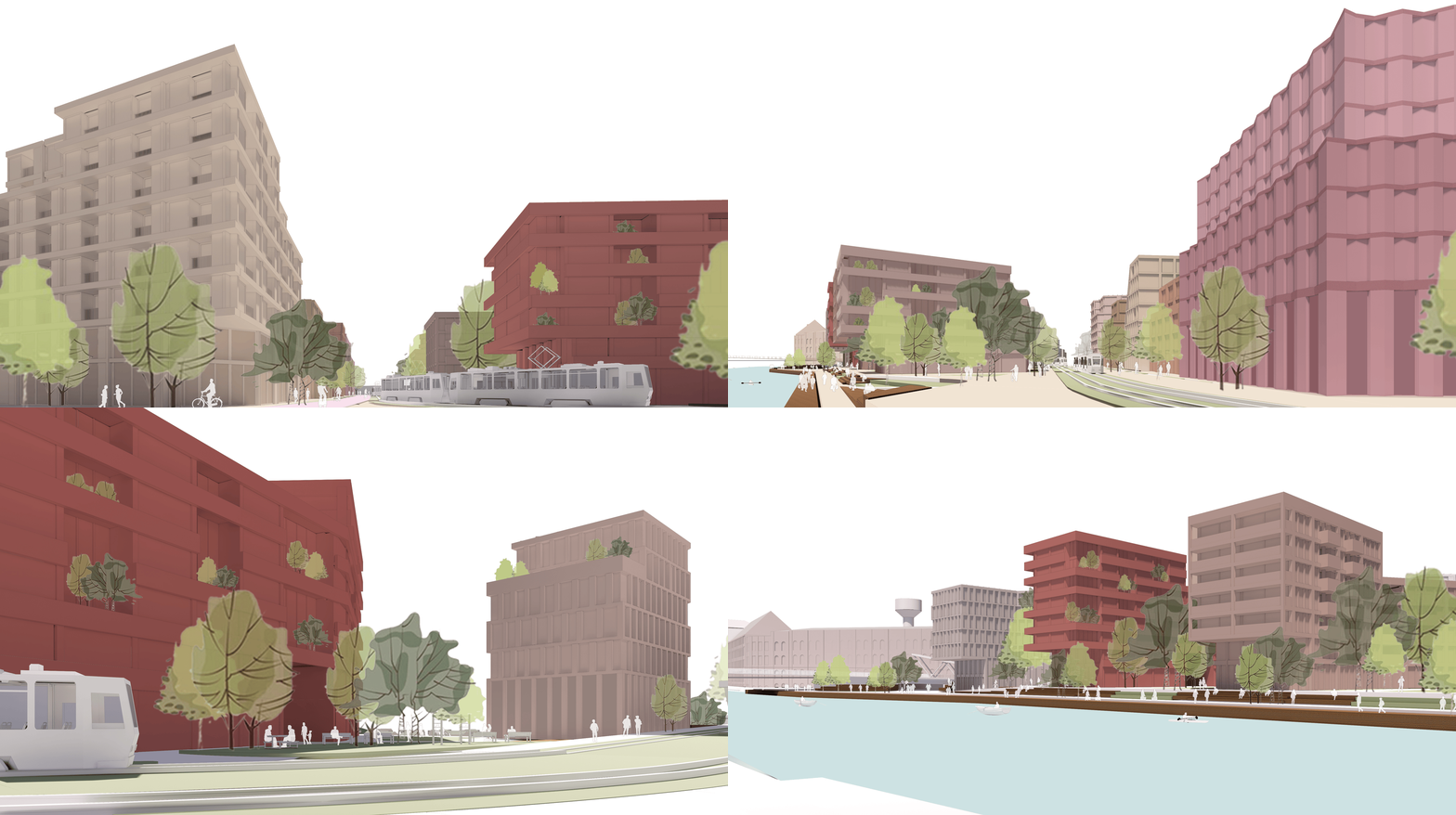
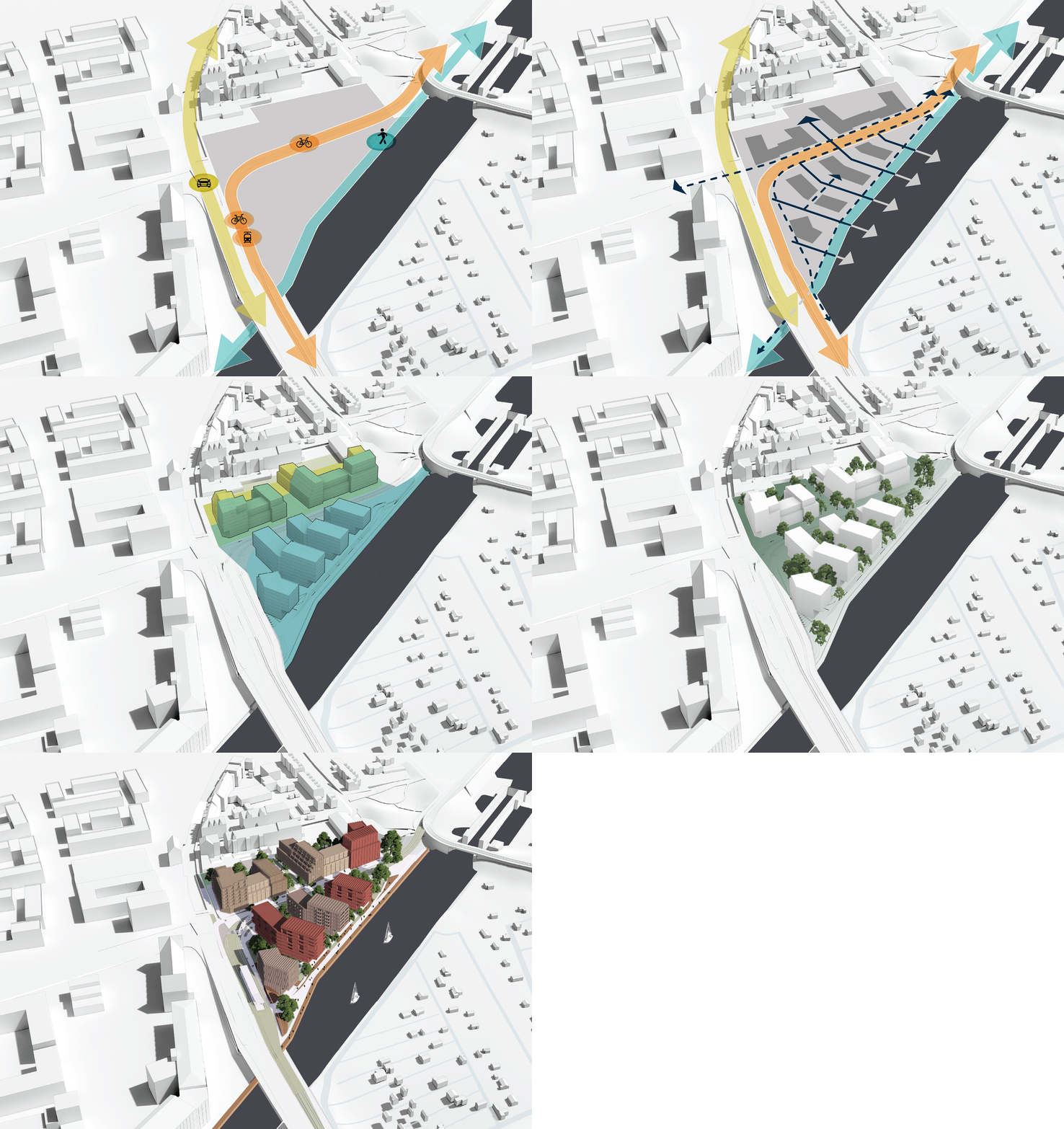
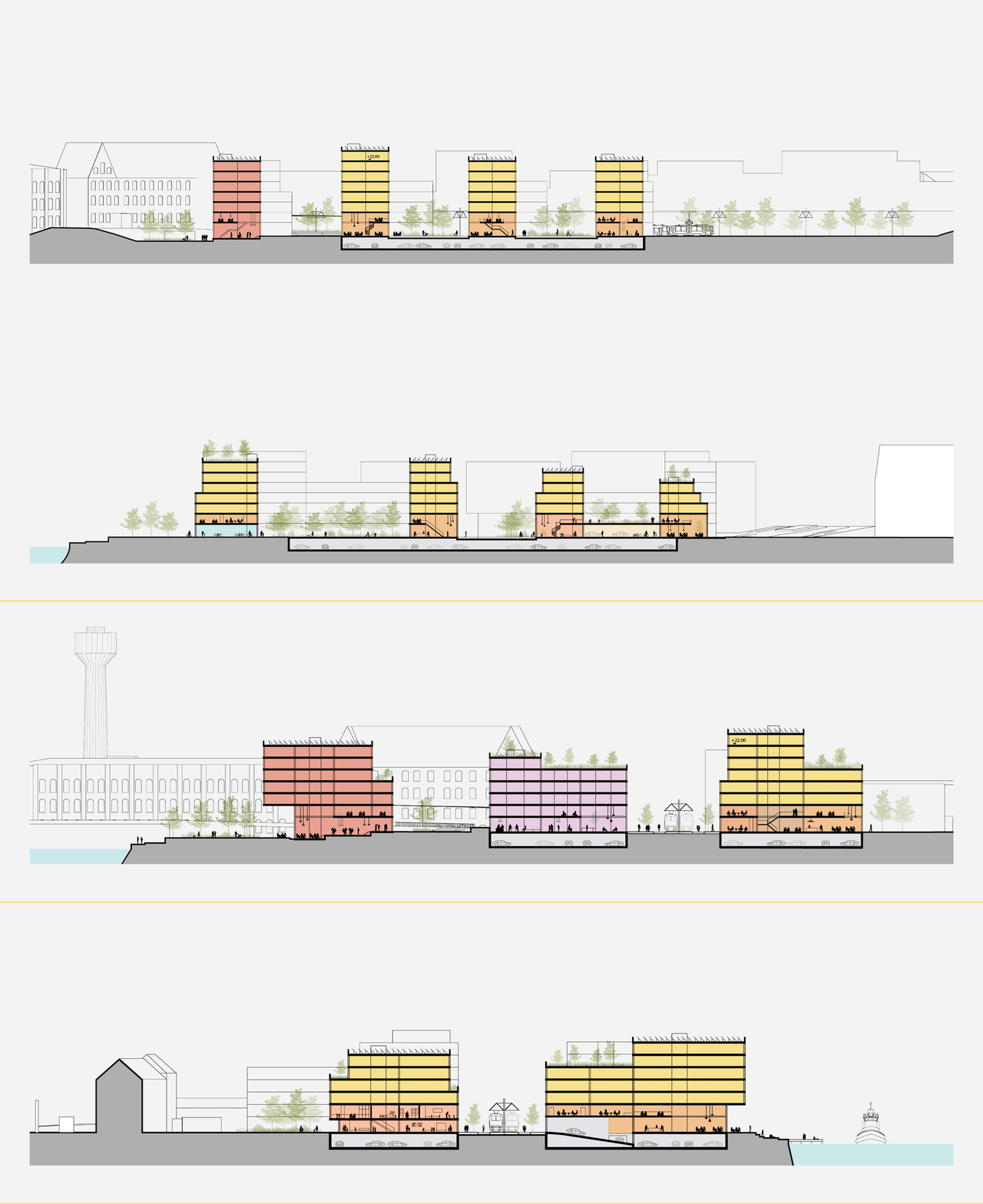
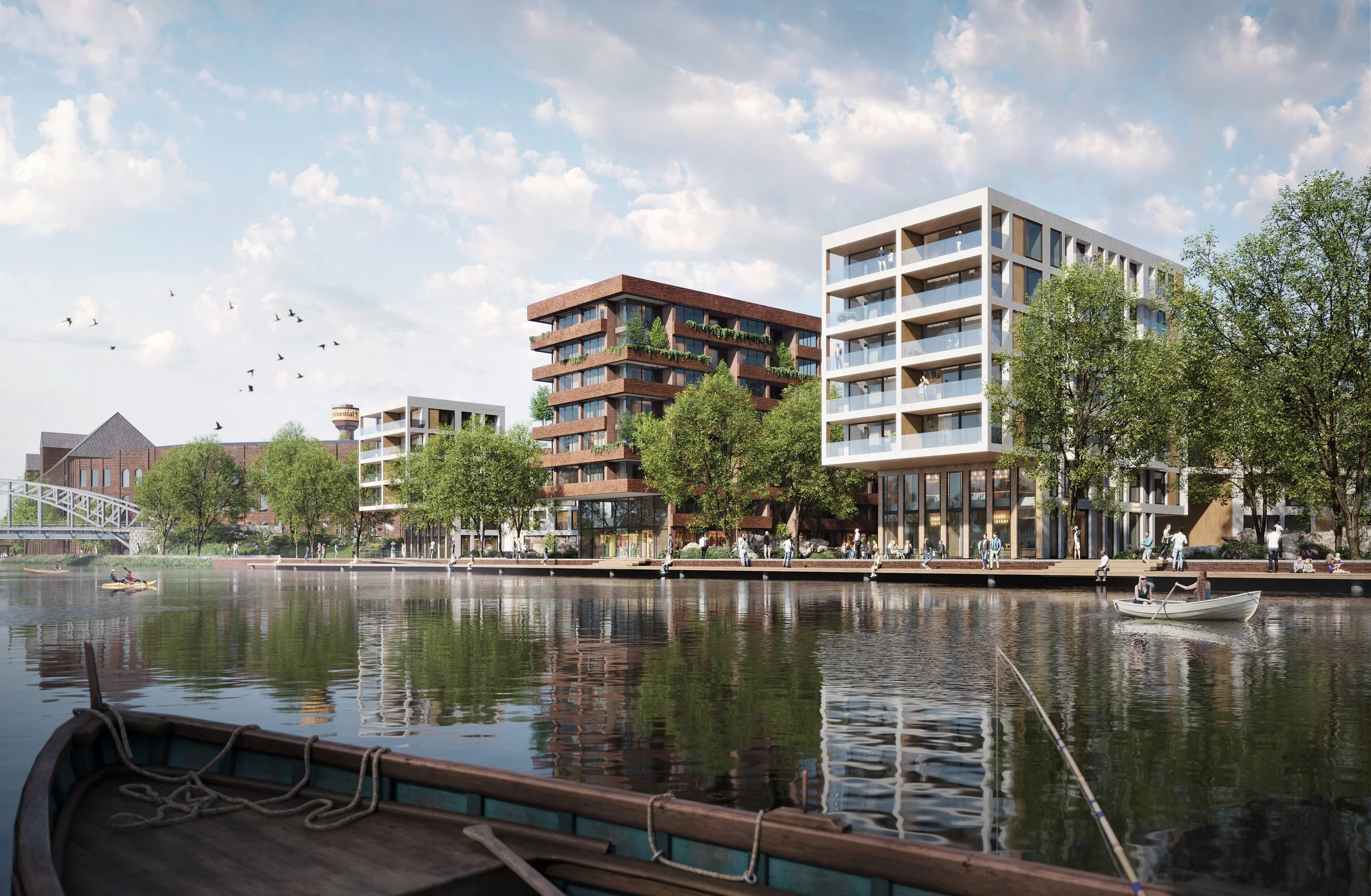
Each distinct neighbourhood is linked by a continuous landscape framework that binds the entire project together. Each area has its own spatial character and mix of housing types, including a dedicated tiny-house neighbourhood along the northern banks. A core ambition is to prioritise walking, cycling and public transport by creating a fully car-free environment. Vehicular access and underground parking are concentrated at the northern edges of the plan, keeping the heart of the neighbourhood free from traffic. Burton Hamfelt, together with LOLA Landscape Architects, UP+ and SHP, is responsible for the Docklands in the southern part of the site. Here, a continuous park and promenade activate the riverbanks, offering strong addresses for the finger-like building structures and expansive views over the water. Two major parks, one central with wet meadows and one at the peninsula’s tip with a lookout hill, anchor the landscape where the waterways meet.